
Week 35 · August 24–28, 2026
Resume terminal sessions in the Claude Code Desktop app, review feedback reports that Claude drafts for you, and start a session in restricted mode.
Releases v2.1.240 → v2.1.250 3 features · August 24–28
Resume terminal sessions in the Desktop app Desktop
Type /resume in the Claude Code Desktop prompt box to pick up any session you started from the CLI and continue it in the app with the full conversation and context intact. Search your sessions by title, folder, or branch, and preview where you left off before you resume.
In a Desktop session, run the command to list your terminal sessions:
> /resume
Select a session and press Enter. The conversation opens in the app where you left off.
Move between the CLI and Desktop
Claude-drafted feedback CLI
When a tool keeps failing, Claude can't help with a request, or you point out a mistake, Claude now drafts a feedback report for you with the SendFeedback tool. A card above your prompt shows the draft, and you can review, send, or dismiss it from there. Nothing reaches Anthropic until you send it. Requires v2.1.238 or later.
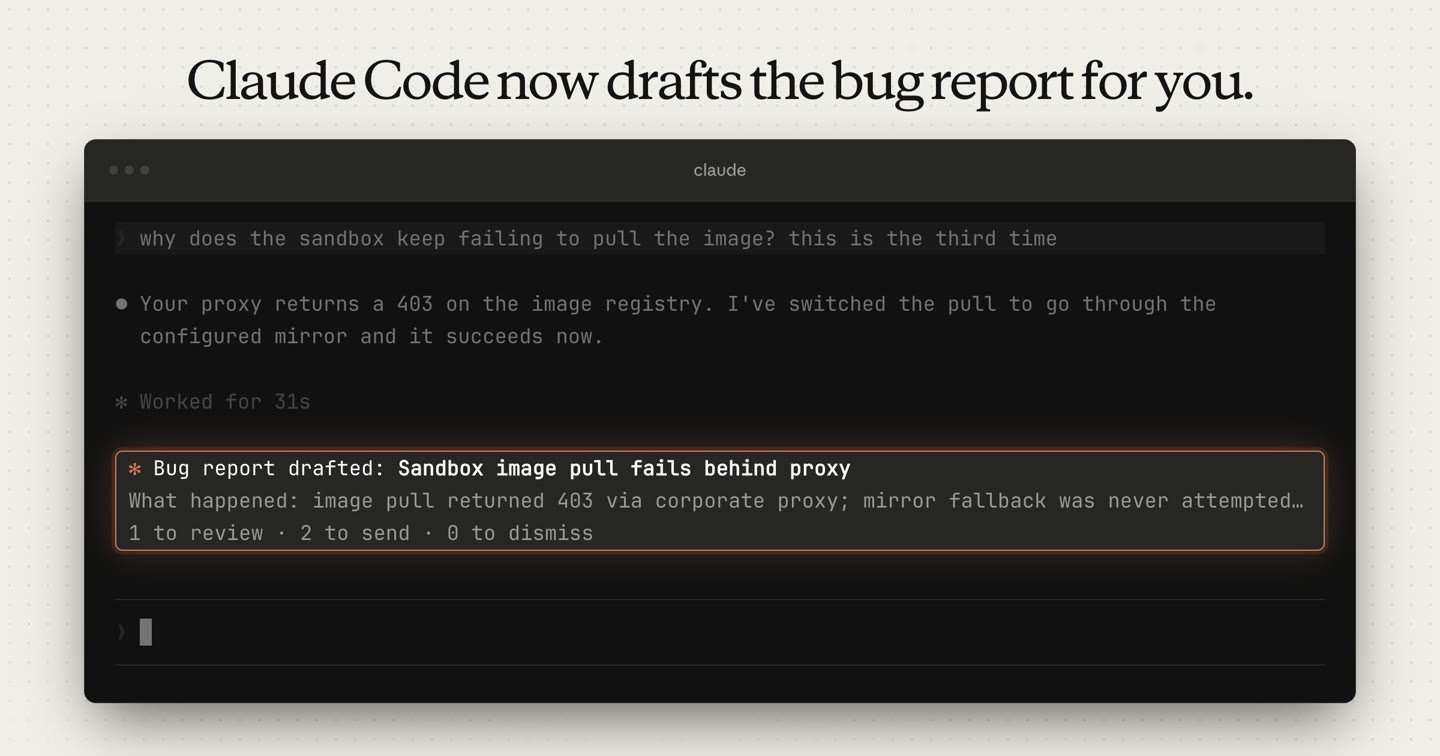
Run /feedback with no argument to open your queue of drafts from every session:
> /feedback
Select a draft, then edit, send, or discard it. To turn drafting off, set Claude-drafted feedback to off in /config.
Restricted mode v2.1.248
Restricted mode starts Claude Code without the built-in tools that run commands or code. Use it when an evaluation harness drives claude on a shared machine. Start it with --restricted or set CLAUDE_CODE_RESTRICTED=1. Claude Code also removes WebFetch, confines the file tools to the working directories, loads only managed settings and --settings, and refuses the bypassPermissions permission mode.
Run a non-interactive query without the command-running tools:
claude --restricted -p "review src/ for SQL injection risks"
To give Claude one of the removed tools back, list it in --tools together with the other built-in tools you want, for example --tools "Bash,Read,Edit". --tools is an allowlist, and its default preset doesn't restore the removed tools.
Other wins
Set the new modelPicker setting to extend or replace the /model picker's built-in list with your own ordered, labeled entries, including Amazon Bedrock or Google Cloud's Agent Platform model IDsSet promptCacheTtl to 1h to keep a one-hour prompt cache on the main conversation when you use an API key or a cloud provider; subagentPromptCacheTtl sets the TTL for subagents and all other requests outside the main conversationOn Pro, Max, Team, and Enterprise plans, /usage adds a Loops breakdown: run count, total tokens, tokens per run, and last run for the /loop and scheduled tasks that used the most tokensOrganizations on contracted rates can set the modelPricing managed setting so /usage, the status line, and OpenTelemetry report cost at those rates instead of list price/login offers Sign in with your Console account under the Anthropic Console account option, so members of Console organizations that don't allow API keys can sign in without creating oneRun /permissions and open the new Auto mode tab to view and edit auto mode classifier rules without opening a settings fileWhen auto mode is available, Bash permission prompts in the Manual and acceptEdits permission modes offer a Yes, and switch to auto mode option; select it to approve the command and switch the session to auto modeAfter you move a session with /cd, the new directory's project settings, hooks, .mcp.json servers, skills, and subagents take effect immediately instead of on the next --resumeIn non-interactive sessions, including -p runs, Agent SDK runs, and cloud sessions, Claude Code continues a response that a server error, dropped connection, or stall cut off mid-stream, when the partial response contains text and no tool callsA subagent that stops at its maxTurns limit returns its output marked as partial, with a hint that Claude can continue it with SendMessage, instead of appearing finishedOn Amazon Bedrock, Google Cloud's Agent Platform, and Microsoft Foundry, sessions on the same machine can now message each other, /loop can choose its own interval, and /model and /effort apply immediately instead of after the turn endsThe native installer and auto-updater download a zstd-compressed build, about 75 MB instead of 340 MB on Linux x64, and native builds load code on demand, using roughly 40 to 70 MB less memory per session